
I wrote about how reframing greed can be a huge benefit in the last installment, highlighting the importance of giving yourself permission to take all the care you need, even when you feel like you’re overdoing it. In this post, I plan on also reframing humility and strategically using it as a tool of empowerment. Humility, of course, is maintaining a level of modesty about how important something is, or how much value it has. When I was in high school, I used to have a shirt that said, “I’m the most humble person you’ll meet, just ask all the people I’ve helped.” It was a joke, and it was a perfect example of not being humble. Though I do love helping people, I don’t want to use it as a tool of empowerment. It does feel good to help others, but it’s not something I want to explicitly get attention for.
So let’s shift to talking about humility in regards to post-traumatic stress. One of the foundational elements of mitigating trauma is understanding that post-traumatic stress is internal, meaning that the majority of the stress comes from within. It is based on external events, but once you can nail down the fact that the sources of post-traumatic stress are learned experiences (thus, in your head) and must be unlearned, naming traumas becomes easier, and mitigating them becomes the practice. For those of us who deal with c/PTSD on the regular, we know that our problems often feel much larger than us. It’s the same with stress in general, really. It simply feels bigger than you can manage.
If we frame it as a form of currency, that feeling of inadequacy becomes extremely valuable. The overwhelm from having too much to do starts to go up in price. This is why the negative self-talk is so loud. It’s not because you want to hear it, but it is paying heed to this stuff that has suddenly become these high-value situations rolling about in your head.
In more casual terms, that shit needs to be humbled.
So how can we humble our trauma when it feels overwhelming? We survivors of things don’t usually have a problem being humble, ourselves, but when the overwhelm happens, our humility becomes subservience to the overwhelm. For me, the mood swings and trauma triggers have at times been so intense that it would incapacitate me in a freeze state for hours at a time. In therapy, I learned about some super quick fixes to help mitigate that, and one is role playing that the trigger had a source that either fit or could be shrunk to fit into a tiny container. Negative self talk becomes little imps and i stuff them into tiny boxes with labels. I think this is literally called “the container method.”
I loved this trick so much that I spent time in Elder Scrolls Online, taking one of my larger homes and furnishing it with a new vase or treasure chest or safe box, etc every time I needed to make another container for myself. Having the visualization that I’ve effectively shrunk the thing and put it in a container (and labeling it for later) has produced quite the feeling of control and power over whatever the stress is. My house full of containers in the game acts as a sort of “I love me” wall so I can look upon all of my accomplishments when I need to be reminded of things I’ve overcome.
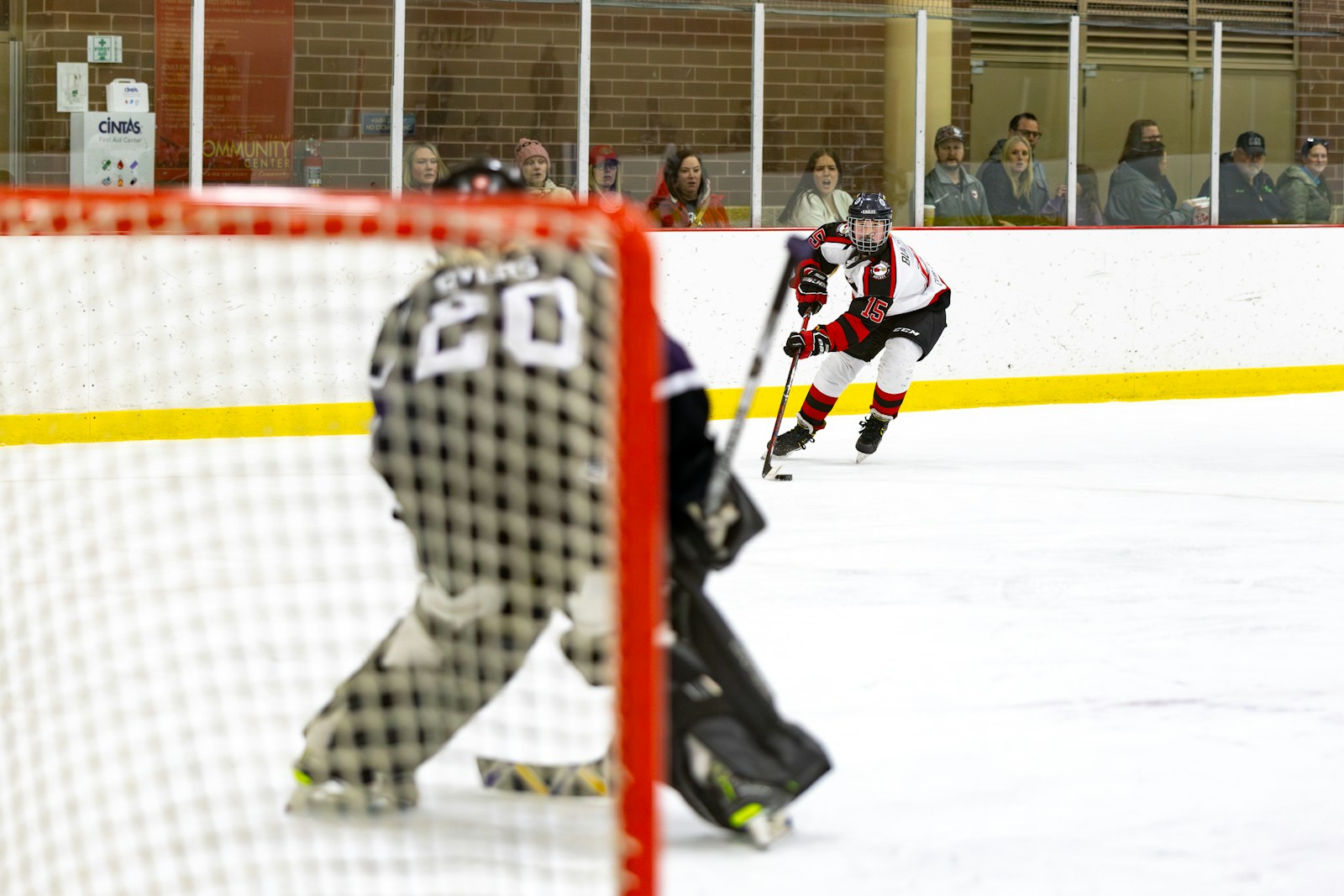
I also had a shirt back when I was a goalie that said “My goal is to deny yours.” I utilized a practice that I learned as a goaltender that really doesn’t have a name, it was just visualization of being bigger than the situation. Your goal as a goalie is to take up so much space in front of the net so the oncoming shooters won’t have any real estate to shoot at. Come out of the crease, square up, butt low, glove out, paddle blade firmly on the ground, and maintain a position between shooter and net to force them to either take their shot or make a move. They have to either to work around you or dump the puck or play back into their own area.
Translated to stress and overwhelm: when I feel small or begin to feel like a literal child (this is c/ptsd specific, I think), I try to stop and breathe and imagine myself to be bigger and taller than whatever has triggered me into the regression. Just like I did as a goalie vs the shooters. What this would do is deny my overwhelm the ability to actually overwhelm me. It works every time, when I can get myself to pause and breathe and imagine. In these situations, the window of opportunity for me is very quick, and I’ve not completely mastered this, yet, though I’ve shown marked improvement with it. I’d say I’m 6 or 7 out of 10 now on these situations… Since I started my mood stabilizers, though, this has become a lot easier, since my mind has slowed down enough to think before reacting. It is very bizarre to me how imagining yourself being bigger actually works. But it does, so I do it.
Humbling the thing that feels bigger than you can be quite the boon. (not relating this to social interactions, mind you.) Most of the time (for me) the trigger is the notion of being judged for not being able to follow through on a task, whether or not I’ve done enough for others, or being greedy, as I mentioned in the last post. So being able to make myself bigger or make the thing smaller, while performative in a way, actually gives me the empowerment I need to follow through on whatever is going on.
By reframing humility as a tool for mitigating trauma, we can take control of those overwhelming situations and feeling of being less than them. When you humble the thing that feels bigger than you, whether it’s a trigger, a task, or a wave of shame, you take your agency back, continue moving forward and do what needs to be done.
Stay humble, my friendos, but make sure your stress is humbler.